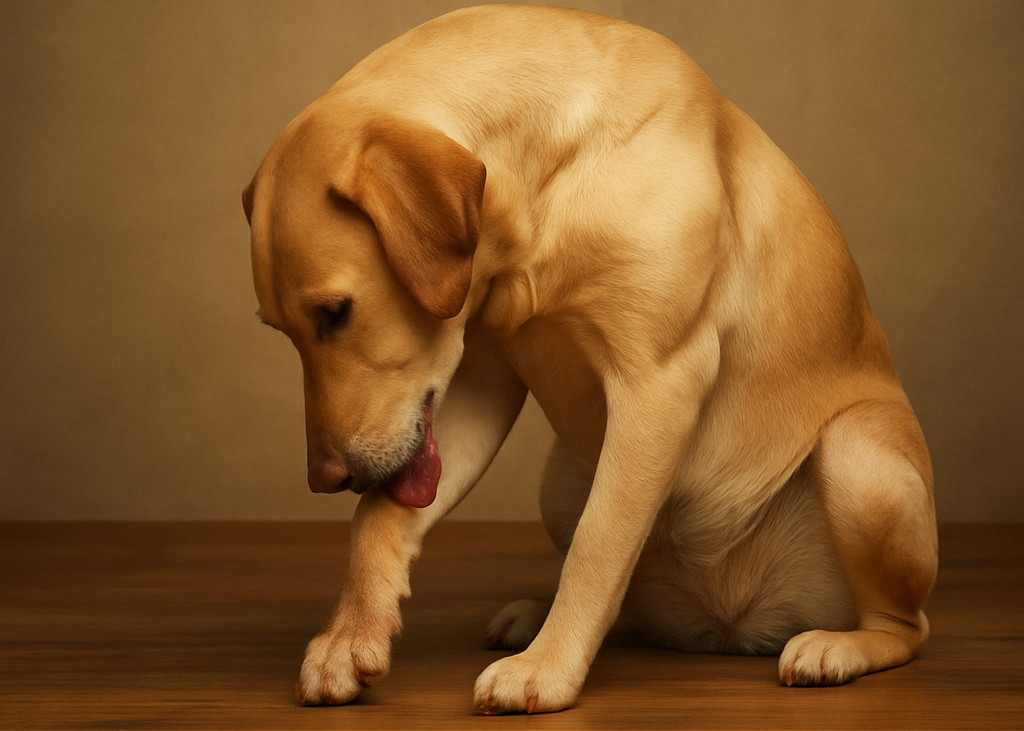
The first sign is often small.
Maybe it’s the sound of your dog licking his paws at night, steady and insistent. Or maybe it’s a faint smell, like corn chips, rising when he curls beside you. You look closer: the fur between his toes is stained reddish-brown, and he can’t seem to leave it alone.
That’s when many pet parents first wonder: what’s going on?
The answer, more often than we think, is yeast.
Yeast infections are among the most common skin and ear problems in dogs — yet they’re also among the most misunderstood. They can show up in subtle ways at first, and every dog’s story looks a little different. But the thread is the same: an imbalance on the skin that tips from harmless to uncomfortable.
What Is a Yeast Infection?
Dogs naturally carry yeast (Malassezia pachydermatis) on their skin. Alongside bacteria, it’s part of their normal ecosystem — just as moss belongs to a stone, or lichen to a tree. In balance, it causes no harm.
But when that balance shifts — because of moisture, allergies, or weakened defenses — yeast can multiply. And when it does, it irritates the skin, ears, and paws, leaving a dog itchy, restless, and often in pain.
Signs to Watch For
Yeast doesn’t always announce itself loudly. It creeps in quietly, wearing many disguises. Look for:
- Paw licking or chewing — often the first and most noticeable sign.
- Reddish-brown fur staining between toes or around the mouth.
- Musty or “corn chip” smell — a telltale sign of yeast overgrowth.
- Ear issues — scratching, head shaking, dark discharge, or odor.
- Skin irritation — redness, small bumps, or rash-like patches on the belly, armpits, or groin.
- Thickened or darkened skin if the problem becomes chronic.
Every dog is different. Some will only have itchy paws, others may struggle with chronic ear infections, and some may show both.
What Causes Yeast to Flare Up?
Several factors can tip the scales:
- Allergies — food, environmental, or seasonal.
- Moisture — humid summers, frequent swimming, or even a damp bed.
- Weakened immunity — stress, illness, or other conditions.
- Diet — carbohydrate-heavy kibble can fuel yeast growth.
- Underlying health issues — such as hormonal imbalances.
Think of yeast as weeds in a garden: always present, but only overtaking when conditions favor them.
Caring at Home (With Veterinary Guidance)
Yeast infections aren’t something to ignore. They cause real discomfort, and left unchecked, they can worsen. That said, there are steps you can take alongside your vet’s advice:
- Keep paws and ears dry after walks, swims, or baths.
- Use prescribed cleaners or drops for ear yeast infections.
- Antifungal shampoos — sometimes recommended for skin flare-ups.
- Diet adjustments — lowering sugars and starches may help.
Most importantly: avoid home remedies unless approved by a veterinarian. Vinegar rinses or harsh treatments can make matters worse if used incorrectly.
When to See the Vet
Call your vet if you notice:
- Symptoms lasting more than a few days.
- Your dog crying, scratching raw, or showing signs of pain.
- Ear discharge that is dark, thick, or foul-smelling.
- Skin that’s thickening, darkening, or spreading with lesions.
Yeast infections often need medication — oral or topical — to clear fully. And if they keep returning, your vet can help investigate deeper causes like allergies.
Preventing Yeast Infections
While you can’t eliminate yeast, you can reduce flare-ups by:
- Drying carefully — paws and ears after any water play.
- Routine grooming — keeping fur trimmed in prone areas.
- Balanced diet — one that supports skin and immune health.
- Managing allergies — whether seasonal pollen or certain foods.
- Regular check-ups — catching issues early makes them easier to manage.
Final Reflection
A yeast infection is not a mark of poor care. It’s simply the skin’s balance tipping out of line — something that happens to many dogs, even in the best of homes.
But here’s the gift: by noticing early, by listening to the small signs — the licking, the smell, the quiet restlessness — you can save your dog weeks of discomfort.
Yeast may always be part of their world. But with care, it never has to take over.
Quand la démangeaison cache plus profond : comprendre les infections à levures chez le chien
Le premier signe est souvent discret.
Un chien qui se lèche les pattes sans arrêt le soir. Une petite odeur, comme de “chips de maïs”, quand il vient se coucher tout contre vous. Et en regardant de plus près, le poil entre ses orteils est taché brun-roux… et il n’arrête pas d’y revenir.
Bien des gens pensent : qu’est-ce qu’il a, donc?
Souvent, la réponse est simple : une levure qui a pris trop de place.
C’est quoi, une infection à levures?
Les chiens portent naturellement une levure sur leur peau (Malassezia pachydermatis). Ça fait partie de leur équilibre, comme la mousse sur une roche. Tant que tout reste en balance, il n’y a pas de problème.
Mais dès que les conditions changent — humidité, allergies, défenses affaiblies — la levure peut se multiplier. Et là, ça pique, ça chauffe, ça gratte.
Les signes à surveiller
- Léchage ou mordillage des pattes
- Poil taché brun-roux entre les orteils
- Odeur “de chip” ou un peu rance
- Oreilles qui grattent, secouage de tête, écoulement foncé
- Peau rouge, irritée, surtout au ventre, sous les pattes ou à l’aine
- Peau épaissie ou noircie si ça dure longtemps
Chaque chien réagit différemment : certains n’ont que les pattes atteintes, d’autres les oreilles, d’autres les deux.
Pourquoi ça arrive?
- Allergies (nourriture, pollen, poussière, saison)
- Humidité (été chaud, baignades, lit humide)
- Défenses plus faibles
- Nourriture trop riche en glucides
- Problèmes de santé sous-jacents
C’est comme les mauvaises herbes dans un jardin : elles sont toujours là, mais elles prennent le dessus seulement quand le terrain leur sourit.
Que faire à la maison (avec suivi vétérinaire)
- Bien sécher pattes et oreilles après les sorties
- Nettoyer les oreilles avec les produits prescrits
- Utiliser un shampoing antifongique si conseillé
- Ajuster la nourriture pour limiter le sucre et l’amidon
Évitez les recettes “maison” trouvées sur Internet sans avis vétérinaire. Mal utilisées, elles peuvent empirer la situation.
Quand consulter?
- Symptômes qui durent plus que quelques jours
- Chien qui se gratte jusqu’au sang ou qui gémit
- Oreilles qui coulent, odeur forte
- Peau qui s’épaissit ou devient noire
Un traitement médical est souvent nécessaire, et si ça revient régulièrement, il faut aller chercher la cause plus profonde.
Prévenir les infections
- Bien sécher après les bains ou la nage
- Toilettage régulier, poils courts dans les zones sensibles
- Nourriture équilibrée
- Gestion des allergies
- Vérifications régulières
En conclusion
Une infection à levures, ce n’est pas un signe de négligence. C’est juste un déséquilibre qui s’installe. Mais si on l’attrape tôt, si on écoute les petits signes — léchage, odeur, agitation — on épargne beaucoup de souffrance à notre compagnon.
Les levures feront toujours partie de leur monde. Mais avec attention et douceur, elles ne prendront jamais toute la place.
Reste bien au chaud,
Mélanie Gagnon, Pet Care Advisor

 The Posh Paw Blog
Lämna en kommentar