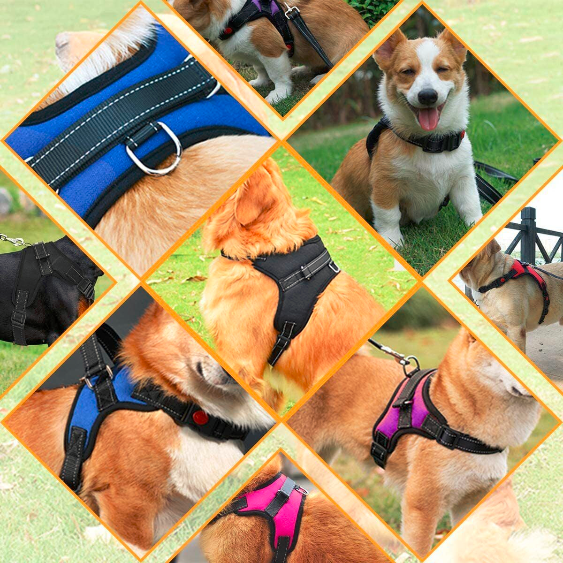
Whether you’ve got a curious puppy pulling toward every squirrel in the park, or a strong adult dog that turns every walk into a power lifting session—you’re not alone.
It’s a familiar scene for many dog owners:
You’re gripping the leash with white knuckles, trying to steer a determined four-legged tank who’s laser-focused on anything but you.
And if you’re using the wrong gear?
It can feel like a battle of wills—every single time.
When Walks Become a Tug-of-War
Dogs aren’t born knowing how to walk politely on a leash.
It’s a skill—and just like any other, it takes time, patience, and the right equipment.
Dr. Susan G. Wynn, DVM, a veterinarian and animal behaviour consultant, emphasizes that:
“A poorly fitted harness or collar can cause physical strain and even injury to a dog’s trachea, shoulders, or spine—especially when the dog pulls.”
And that pulling isn’t always misbehaviour—it’s often just instinct.
Dogs are curious. They move fast. They follow scent trails, chase after rustling leaves, and lunge toward other dogs not because they’re bad—but because they’re being dogs.
But when that energy meets the wrong harness?
You’ve got more than a tangled walk—you’ve got a safety risk.
Certified dog trainer Victoria Stilwell, known from It’s Me or the Dog, explains:
“Harnesses that evenly distribute pressure across the chest—rather than the neck—are the safest and most humane way to train and walk dogs that pull.”
Harnesses Designed with Purpose
Not all harnesses are created equal.
Some are built to look cute. Others? To “control.”
But the best ones—the right ones—are built to protect, guide, and empower both you and your dog.
If your dog pulls, strains, or zigzags like a four-legged pinball, a well-designed harness can change everything.
Front-clip harnesses, for example, are recommended by many trainers because they naturally redirect pulling without causing pain.
Dr. Sophia Yin, DVM, a veterinary behaviourist, explained in her training guides that:
“Front-attachment harnesses are one of the most effective tools for teaching dogs to walk calmly on a leash, because they gently turn the dog toward the owner instead of allowing them to charge forward.”
With a well-fitting harness, pressure is distributed across the shoulders and chest—not concentrated on the delicate neck or spine.
That means fewer risks of injury, more control, and better communication between dog and human.
It becomes less of a tug-of-war, and more of a walk together.
How a Harness Saved Their Walks
Take Megan and her Labrador, Duke.
At just 10 months old, Duke was strong, excitable, and built like a furry freight train. Megan loved their morning walks—but dreaded the battle that came with them.
Every outing turned into a full-body workout:
Pulled arms, tangled leashes, apologies to strangers as Duke lunged at every leaf and pigeon in sight.
Megan tried switching collars, shortening the leash—even giving up on the park altogether.
Until her vet, Dr. Amanda Reid, recommended something simple:
“Get him into a front-clip harness. It’ll change everything.”
It did.
The very first walk with Duke in his new harness?
No tug-of-war. No arm strain. Just a curious dog, walking calmly at Megan’s side.
“I cried when we got home,” Megan admitted. “For the first time, I didn’t feel like I was failing him.”
That’s the power of the right gear.
It doesn’t just change your walk.
It changes your relationship.
What to Look For in a Harness
When it comes to walking your dog safely, choosing the right harness isn’t just about size or colour—it’s about function. The right gear turns daily walks from a frustrating tug-of-war into a calm, shared experience.
Here’s what to look for when choosing a harness that works with your dog—not against them.
Front-Clip Design (Especially for Pullers)
If your dog pulls like a sled dog at the Iditarod, this is your starting point.
A front-clip harness has the leash attachment on the chest rather than the back. Why does this matter? Because when your dog lunges forward, the leash gently redirects them back toward you instead of encouraging them to pull harder.
Many dog trainers—including Victoria Stilwell, professional dog trainer and TV personality—recommend this style because it naturally curbs pulling without causing discomfort or confusion. It promotes focus on the handler and makes walks easier to manage without relying on force or correction.
This type of harness is a game-changer for:
- Young, energetic dogs still learning leash etiquette
- Large breeds that are stronger than their humans
- Rescue dogs or dogs with reactivity
Back-clip harnesses may be more common, but for pullers? Front-clip is the way to go.
Even Pressure Distribution
A harness should distribute pressure across your dog’s body in a balanced, safe way.
Poorly designed harnesses—or incorrectly fitted ones—can put strain on delicate areas like the neck, spine, or underarms. This can lead to muscle strain, joint discomfort, or in some cases, long-term injury.
Dr. Susan G. Wynn, DVM, points out that gear that places pressure directly on the trachea can contribute to coughing, gagging, or even collapse in smaller or brachycephalic (flat-faced) breeds.
The best harnesses cradle the chest and torso like a hug—not a chokehold. When your dog lunges, the energy is absorbed across a wide area, preventing pain while maintaining control.
This kind of pressure management is especially important for:
- Senior dogs
- Small or toy breeds
- Dogs with past neck or spinal injuries
Padding in the Right Places
It’s not just about control—it’s about comfort.
A good harness is like a well-fitted backpack. If it rubs, chafes, or pinches, it’s going to be a problem. Look for soft, breathable padding, especially:
- Around the chest plate
- Under the arms (or “armpits”)
- Along the back and belly straps
Materials like memory foam, neoprene, or breathable mesh add comfort and reduce the risk of pressure sores or hot-spots. The goal is to make your dog forget they’re even wearing it—and that only happens when it feels good.
If your dog suddenly resists walks or hesitates when you bring the harness out, it might be a sign it’s uncomfortable.
Adaptability for the Perfect Fit
No two dogs are built the same—not even two from the same litter. A harness that’s too tight can cause discomfort, while one that’s too loose can slip or tangle.
That’s why a high-quality harness should offer at least three points of adjustment—around the chest, belly, and neck. This allows you to tailor the fit to your dog’s unique shape and ensures that the harness stays secure and supportive.
Tip from trainers:
You should be able to slide two fingers between the harness and your dog’s body. Snug, but not tight.
A proper fit helps:
- Prevent escapes (especially for smaller or slimmer dogs)
- Avoid shifting during movement
- Ensure consistent control without rubbing or slipping
Durable Yet Lightweight Construction
Durability matters—especially if you’ve got a strong puller or an adventure pup that sees every mud puddle as an invitation.
Look for harnesses made from tough materials like ballistic nylon or reinforced polyester. Double-stitched seams and heavy-duty buckles mean you can trust it when your dog gets excited—and that it’ll last longer than a few rainy walks.
That said, weight matters too. A harness that’s overly bulky can restrict movement or fatigue smaller dogs. The best harnesses are durable, but minimal—tough where it counts, light where it matters.
High Visibility and Safety Features
Unfortunately, walks don’t just happen on sunny afternoons.
If you’re out early in the morning or heading home after dark, safety becomes a top concern. Reflective stitching, neon trim, or built-in LED lights can make a huge difference in helping drivers or cyclists see your dog from a distance.
Visibility is especially important for:
- Dark-coated dogs
- Short winter days
- High-traffic neighbourhoods or parks
Even a simple reflective strip can be the difference between seen and unseen.
Harness vs. Collar: Not a Competition
Collars are still useful—no question.
They’re perfect for ID tags and quick backyard outings. But when it comes to daily walks, especially with a dog who pulls or reacts strongly to distractions, the harness simply does more.
A collar puts pressure on the most sensitive part of your dog’s neck.
A harness spreads that pressure across the chest and shoulders, letting you guide your dog safely—without risking injury or causing discomfort.
It’s not about one being “better.”
It’s about choosing the right tool for the right job.
Training With a Harness: A Partnership on Every Walk
Switching to a harness won’t magically solve leash pulling overnight—but it does give you a stronger foundation to build good habits.
Pair your harness with:
- Positive reinforcement (praise, treats, happy voice)
- Short training sessions in quiet environments
- Consistency—walk the same route and reward calm behaviour
Certified trainer Patricia McConnell, PhD, emphasizes that:
“A dog learns best when the gear helps guide behaviour gently, and the human stays calm, consistent, and encouraging.”
In short?
A harness is the gear. You are the guide. Together, you make the walk a success.
It’s Not Just a Harness—It’s a Better Walk
At the end of the day, a good harness isn’t about control—it’s about connection.
When your dog feels safe, secure, and comfortable, everything changes. The tension eases. The leash slackens. You’re not dragging or correcting—you’re moving as a team.
Whether your pup is a leash-lunging Labrador or a nervous little rescue, the right harness can help them walk with more confidence… and help you breathe a little easier too.
Because walking your dog shouldn’t feel like a chore.
It should feel like time well spent.
 The Posh Paw Blog
Lämna en kommentar